
Seawall Installation and Repair in Duluth
We might not have any seas in the Duluth area, but we do have a Great Lake and a number of other lakes and rivers. And where you have bodies of water, especially those prone to big waves, seawalls are a must.
They don’t however, last forever. The very same elements that the seawalls protect will also wear them down over time. Sometimes, repairs are possible. In other cases, the seawall must be replaced in order to keep it from failing.
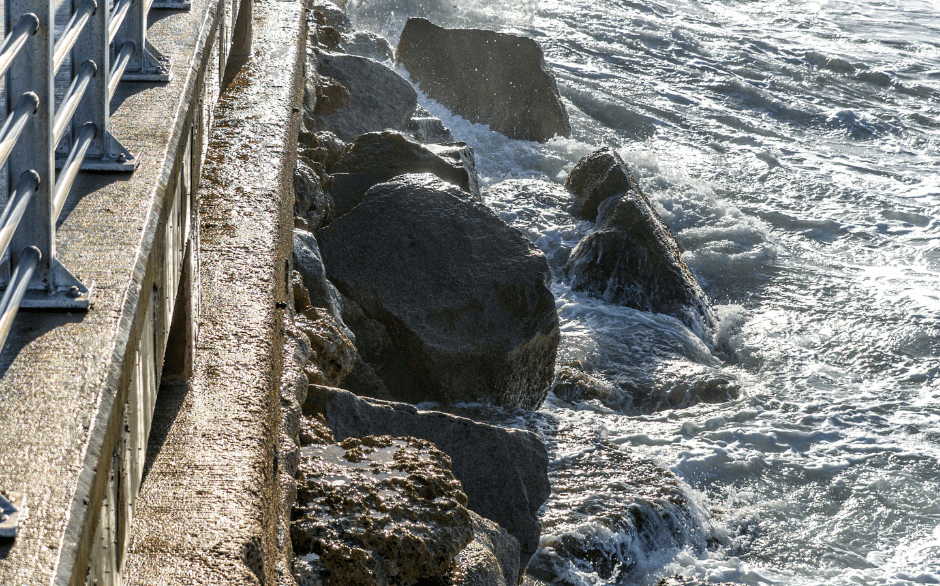
Purpose of Seawalls
Waves, especially those on large lakes and seas, carry a significant amount of energy. Over time, this can lead to significant issues with erosion, especially in developed areas.
In some ways they function as retaining walls, if a retaining wall’s bottom section happened to be under water.
While in the case of the retaining wall, the eroding force the wall is protecting against is, to some degree, gravity, seawalls absorb or reflect the energy of the waves in order to protect the surrounding soil.
Watch Your Seawall for Signs of Damage
Waves on Lake Superior can reach almost 30 feet at times. When that type of energy is buffeting a structure like a seawall, it is going to gradually weaken it.
That is why, to prevent it from failing completely, it is important to monitor your seawall for signs that it might be breaking down.
Looking for a Seawall Installation Company Near You? Contact Alliance for a Free Estimate
If shoreline erosion is posing problems for your property or if you have an existing seawall that is damaged or showing signs of age, contact Alliance Inc. today. We have the know-how to construct a solid, concrete seawall to protect your property from the fury that our resident Great Lake can occasionally muster.