
How to Prevent Ice Dams Before They Start: A Guide to Attic Insulation & Air Sealing
Protecting Your Home Across the Twin Ports & North Shore From Winter Damage
Preventing ice dams and stopping severe heat loss requires more than just adding a few extra inches of attic insulation. For homes across Duluth, Hermantown, and the North Shore, heavy snow loads combined with hidden air leaks create the perfect conditions for destructive winter ice formation.
Solving the problem for good means addressing the complex structural gaps, roof ventilation flaws, and chimney air bypasses that allow warm air to escape into your attic in the first place.
The Science of Ice Dams: Why Heat Escapes
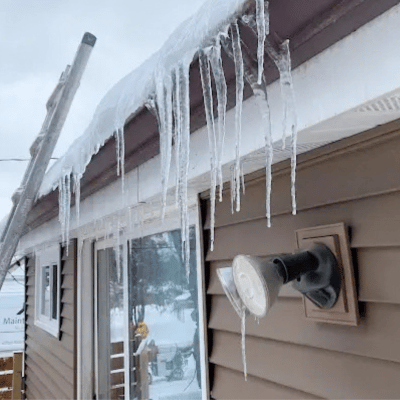
An ice dam forms when warm indoor air leaks into an unconditioned attic space, heating the roof deck from underneath. This causes the snow sitting on your roof to melt, run down toward the eaves, and refreeze at the cold gutters or overhangs. Over time, this ice forms a heavy ridge that traps subsequent meltwater, forcing water upward under your shingles and into your ceilings.
While many homeowners assume adding more insulation is the sole fix, insulation alone cannot stop air currents. Air leaks through structural gaps, light fixtures, and chimney chases sweep heat directly through fiberglass or cellulose.
The Danger of Chimney “Attic Bypasses”
One of the largest sources of heat loss in older North Shore homes is the gap around brick masonry chimneys and fireplace flues.
- The Problem: Frame construction expands and contracts at a different rate than brick masonry, creating wide “attic bypasses” where massive volumes of heat escape.
- The Safety Risk: Standard insulation materials cannot be placed directly against hot chimney flues. Sealing these areas requires code-compliant, fire-rated sheet metal barriers and high-temperature sealants to prevent both heat loss and fire risks.
Comparing Your Insulation Options: Spray Foam vs. Blown-In Insulation
Choosing the right insulation material depends on your attic’s layout, existing ventilation, and budget. Whether retrofitting an older home or upgrading coverage, exploring professional attic insulation services helps determine if spray foam, blown-in cellulose, or a hybrid approach is best for your space.
| Feature | Closed-Cell Spray Foam | Blown-In Cellulose / Fiberglass |
| Air Sealing | Built-in: Expands to create an airtight vapor barrier instantly | Manual Prep Required: Must be paired with joint/top-plate sealing |
| Best For | Vaulted ceilings, roof slopes, knee walls, & leaky rim joists | Flat attic floors, deep coverage, and budget-friendly upgrades |
| R-Value Depth | High (~R-6 to R-7 per inch) | Standard (~R-3 to R-4 per inch) |
| Moisture Resistance | Waterproof: Highly mold-resistant and acts as a vapor barrier | Requires proper attic ventilation & active moisture control |
(Unsure which insulation material fits your home? Evaluating your existing attic depth, roof ventilation, and masonry penetrations is always the best place to start.)
Why Envelope Expertise Matters During Harsh Winters
When extreme weather hits the Twin Ports, addressing roof issues requires more than basic installation crews. If you already have thick ice buildup on your eaves, professional ice dam removal services utilizing low-pressure steam can safely clear the roof without damaging shingles before permanent insulation work begins.
| Scenario | Standard Insulation Contractor | Alliance Inc. (Full-Service Contractor) |
| Active Ice Dams on the Roof | ❌ Cannot help. Requires you to hire and coordinate an separate steaming crew first. | Handled immediately. We utilize safe, professional high-temperature steaming equipment to clear ice dams on the spot. |
| Roof Sheathing & Flashing Damage | ❌ Will not fix. You must hire a separate roofing contractor to handle repairs. | Repaired in-house. We repair damaged shingles, roof sheathing, valleys, and eaves immediately. |
| Chimney Flue & Masonry Bypasses | ⚠️ Risky. May ignore masonry gaps or use non-compliant foam near hot flues. | Expertly sealed. We apply fire-rated metal barriers and proper clearance seals around all brick masonry. |
| Attic Air Sealing & Insulation | Focuses primarily on basic spray foam and blown-in retrofits without structural repairs. | Provides dedicated air sealing and insulation backed by full general contracting expertise. |
Frequently Asked Questions
The most effective way to prevent ice dams is to stop warm house air from leaking into your attic in the first place. You do this through a combination of precision air sealing, thick attic insulation, and proper roof ventilation. When heat can’t escape into your attic, your roof deck stays cold, and snow won’t melt to form destructive ice ridges at your eaves.
Common warning signs include recurring icicles or ice dams along your roofline, drafty upper rooms, cold ceilings, and sky-high winter heating bills. If you poke your head into your attic and can easily see the wooden floor joists above your current insulation, you don’t have enough coverage to stop heat loss and prevent ice dams.
Because Northern Minnesota gets extreme winter weather (Climate Zones 6 and 7), building standards recommend an attic rating between R-49 and R-60. That equals roughly 16 to 20 inches of blown-in insulation, paired with thorough air sealing underneath.
Insulation slows down heat, but it doesn’t block moving air. If you don’t air seal first, warm air will blow right through fiberglass or cellulose like a winter breeze through a wool sweater. Sealing the hidden gaps around light fixtures, pipes, and wall tops before insulating is what truly stops heat loss and helps prevent ice dams.
Brick chimneys expand and contract differently than wood framing, creating wide, hidden gaps where massive amounts of warm air stream straight into your attic. This warm air heats up the roof deck surrounding your chimney, melting the snow above it. Safely closing these gaps with fire-rated sheet metal is one of the best ways to prevent ice dams from forming on that section of your roof.
Yes, as long as your existing insulation is completely dry, clean, and free of past roof leaks, mold, or pest damage. However, we still need to pull back areas to perform proper air sealing underneath before blowing in new material to effectively prevent ice dams.
Most residential air sealing and insulation retrofits in the Twin Ports area are completed in just one day, giving your home immediate protection against heat loss and winter ice formation.
Ready to Stop Heat Loss and Prevent Ice Dams?
Stop paying to heat an under-insulated attic or juggling multiple contractors to fix winter damage. As full-service general contracting and masonry specialists, Alliance Inc. does more than blow in insulation—we diagnose the root causes of heat loss, safely seal complex chimney bypasses, and ensure your home stays warm, efficient, and protected through every North Shore winter. Contact our team today for a complete home envelope evaluation!
- Call or Text Alliance Inc. Today: (218) 591-8039
- Service Area: Duluth, Hermantown, Proctor, Cloquet, Superior, and the surrounding North Shore region.